
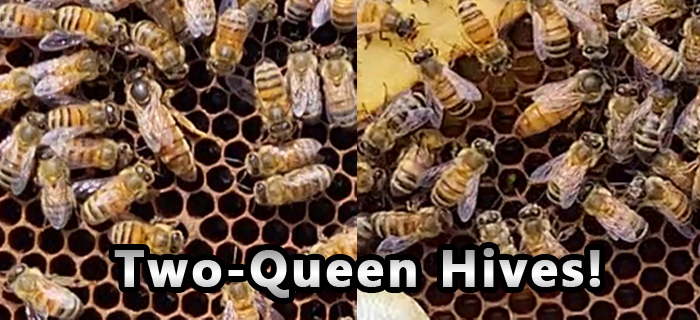
I have stepped into a new experiment for 2026!
What started out as a Demaree arrangement on two separate hives this spring has presented a new-to-me situation… two queens coexisting in each hive!
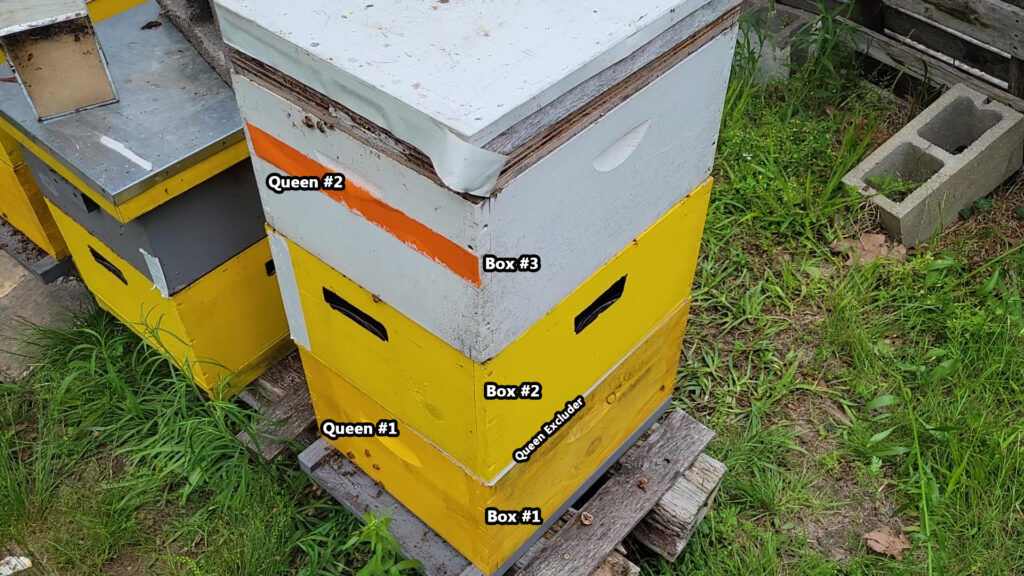
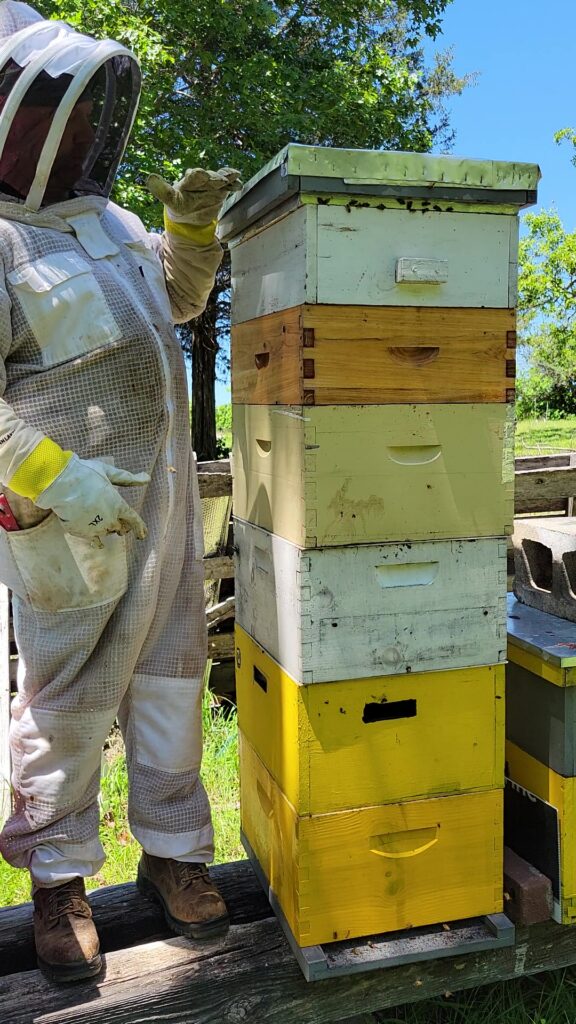
Now, several people have asked… why not just take the 2nd queen and a box and just make another hive. And sure, that would be the easiest split to make; however, as I have confirmed there are two queens both laying eggs in the same hive, separated by a queen excluder, I figured why not push forward and see how big of a hive can I create?!
How did this happen?
While I don’t have 100% confirmation, I suspect what happened is the workers created a queen cell when I moved brood (and apparently some eggs) to the top of the hive when doing the Demaree method. This queen cell was missed in follow-up inspections, which allowed a 2nd queen to emerge, become mated, and returned to the hive using the same secondary entrance. The spacing between the two queens may have given them enough pheromone separation plus the queen excluder keeping them physically separated as to not want to kill each other. In theory, the gradual introduction of a second pheromone into a large colony may have been accepted by the workers, as they are free to move through the queen excluder.
What are my goals for these two-queen hives?
The idea of boosting brood and maximizing foragers for nectar gathering during honey flow is the ultimate goal. Since the 2nd queen is new, having a separate hive with her and some brood frames would only delay honey production for a year. In combining two queens in one hive, the contributions of the 2nd queen goes towards the overall benefit of the hive and worker population.
Considerations for fall?
After the honey harvest, my plan is to leave the 2nd queen in place until fall begins as they will need to build up winter resources. Then, depending on the overall health of the hive, I may separate the 2nd queen and bees into a 2nd hive for overwintering. Feeding both hives may be necessary to ensure they have enough food stores for winter.


 0
0
 0
0